Altanian, Mélanie

The injustice of genocide denial is commonly understood as a violation of the dignity of victims, survivors, and their descendants, and further described as an assault on truth and memory. This book rethinks the normative relationship between dignity, truth, and memory in relation to genocide denial by adopting the framework of epistemic injustice.

The framework introduces constructive normative vocabulary into genocide scholarship through which we can gain a better understanding of the normative impacts of genocide denial when it is institutionalized and systematic, and develops and enriches current scholarship on epistemic injustice with a further, underexplored case study. Genocide denialism is relevant for political and social epistemology, as it presents a substantive epistemic practice that distorts normativity and social reality in ways that maintain domination. The framework shows how denial generates pervasive ignorance that makes denial rather than recognition of genocide appear as the morally and epistemically right thing to do. By focusing on the prominent case of Turkey’s denialism of the Armenian genocide, the book shows the serious consequences of this kind of epistemic injustice for the victim group and society as a whole.

The book will appeal to students and scholars working in social, political, and applied epistemology, social and political philosophy, genocide studies, Armenian studies, and memory studies.
De Clerck, Dima ; Malsagne, Stéphane

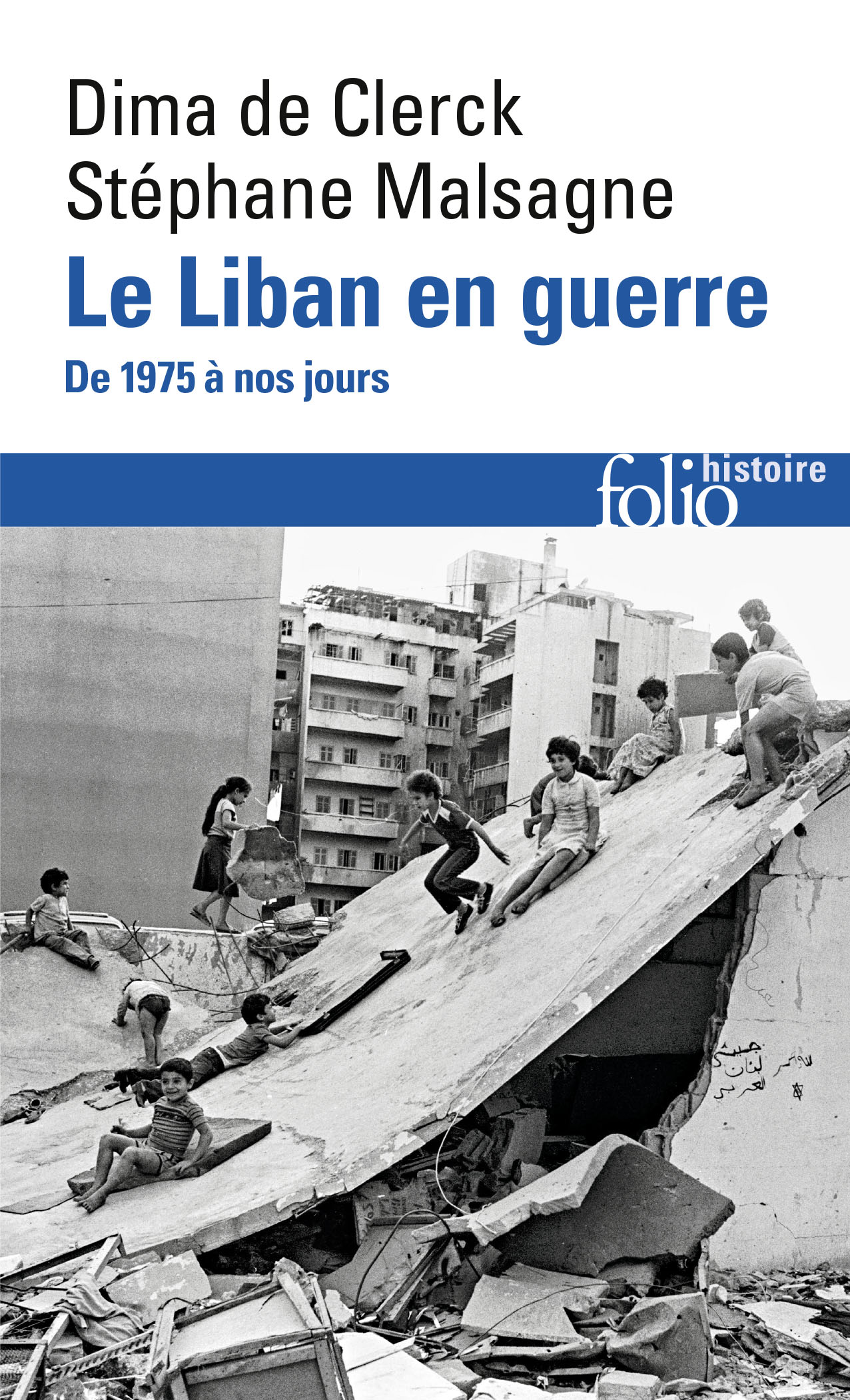
De 1975 à 1990, le Moyen-Orient est ébranlé par l’un des conflits les plus longs et les plus destructeurs de son histoire contemporaine. Rupture traumatique fondamentale pour les Libanais, ce conflit aux multiples facettes et enjeux est l’une des sources majeures qui éclaire les impasses d’un Liban en crise profonde depuis les événements d’octobre 2019. Il préfigure aussi à bien des égards les violences extrêmes (massacres, crimes de guerre et déplacements de population) à l’oeuvre en ex-Yougoslavie aux lendemains de la guerre froide, et dans les guerres du XXIe siècle en Irak, en Syrie et au Yémen.

Longtemps réduite à sa dimension de guerre civile ou de conflit à dimension régionale, la guerre du Liban est d’abord un conflit fortement connecté à l’espace-monde, aux fortes implications militaires, politiques, économiques, sociales, mais aussi culturelles. Le renouvellement récent et profond de l’historiographie sur le sujet invite plus que jamais à proposer une nouvelle lecture de ce conflit global.

Texts by Mohamed Almusibli and Perwana Nazif.

An artist book providing an immersive entry point into Valentin Noujaïm’s cinematic world.

Interzone is an artist’s book published on the occasion of Valentin Noujaïm’s first institutional solo exhibition, Pantheon, taking place at Kunsthalle Basel. It accompanies the premiere of the work La Défense Volume III – Demons to Diamonds and brings together for the first time the artist’s complete La Défense trilogy (2022–25). Edited by Mohamed Almusibli and conceived by Noujaïm and graphic designer Kim Coussée, the volume contains extensive documentation of the trilogy’s development—film stills, analog photographs, archival materials—to offer glimpses behind the scenes of the artist’s collaborative process. Its nonlinear sequences create new dialogues across the trilogy and extend the exhibition’s spatial logic into print. This volume is thus both an extension of the exhibition and an autonomous work, providing an immersive entry point into Noujaïm’s cinematic world.

Valentin Noujaïm’s (born 1991) cinematic work focuses on extinguished life trajectories and reflects on the complexity of power relations within French society. Through his engagement with anti-racist struggles and spatial imaginaries, he sheds light on experiences that have been marginalized by dominant historical and national narratives.

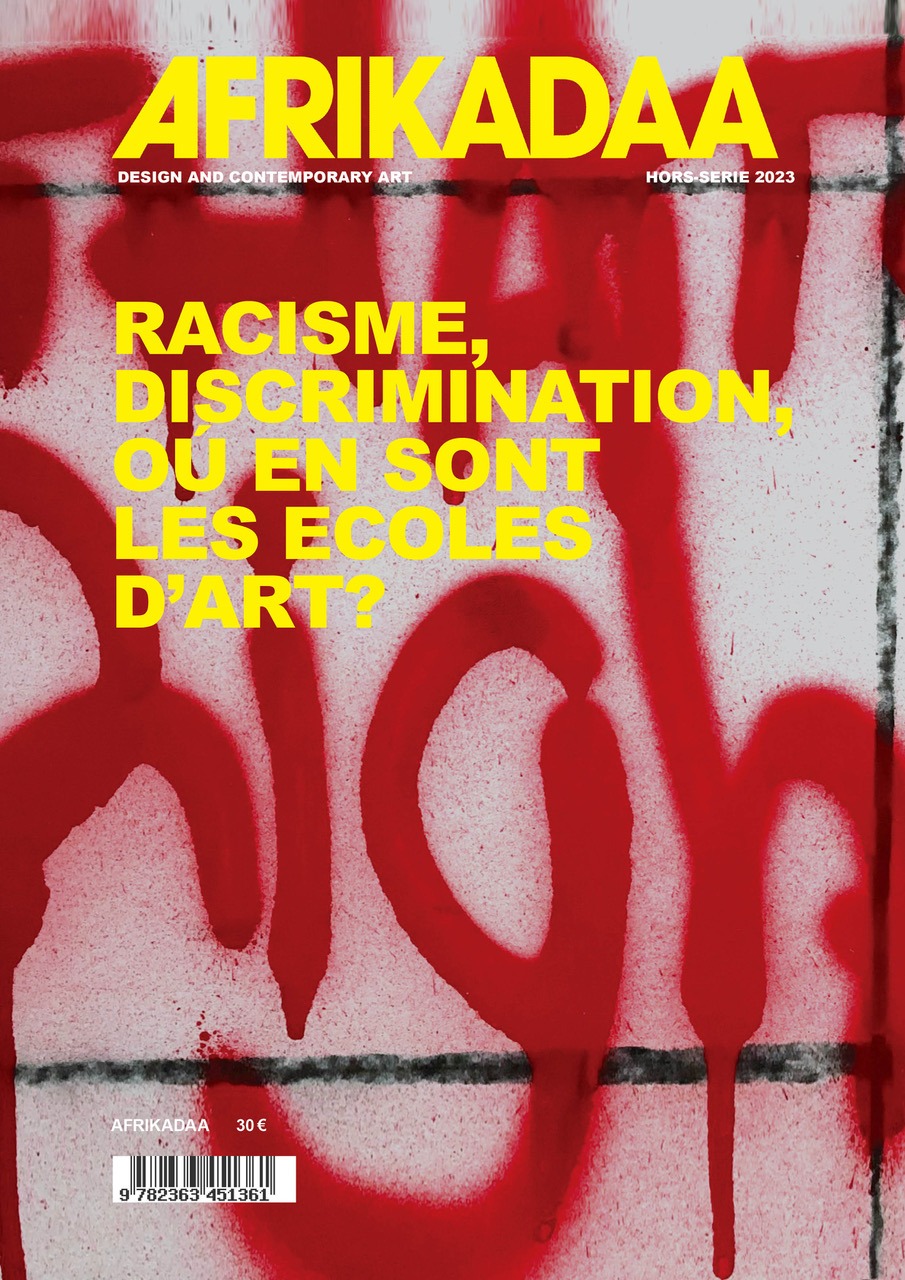
Le racisme en école d’art

Le numéro 15 d’Afrikadaa est consacré à la question du racisme et des discriminations au sein des écoles d’art en France. Les contributions abordent différents points : le corps enseignant et la production de nouvelles pédagogies, l’accueil de la parole des étudiants, les actions menées par les directions d’écoles d’art, la création de nouveaux postes liés aux études décoloniales et postcoloniales, entre autres.

Le projet se confronte à l’institution qu’est celle de l’école d’art en France, un système qui, selon bon nombre de témoignages, est idyllique à l’extérieur et pathétique de l’intérieur. Les contributeurs n’avaient jamais envisagé que le silence exigé par les écoles d’art s’imposerait aux contributeurs.

L’espace éditorial d’AFRIKADAA a toujours été pensé comme un espace refuge et de liberté, de montrer, transmettre, parler, proposer librement. Créée en 2013, la revue d’art papier et digitale AFRIKADAA est menée par un collectif d’artistes, commissaires d’art, historiennes d’art, militantes et étudiantes.

NEWSLETTER

Chaque mois, prenez le temps d’embrasser quelques minutes de réconfort avec les productions culturelles du monde arabe et maghrébin, présentées par la newsletter du mat3amclub !