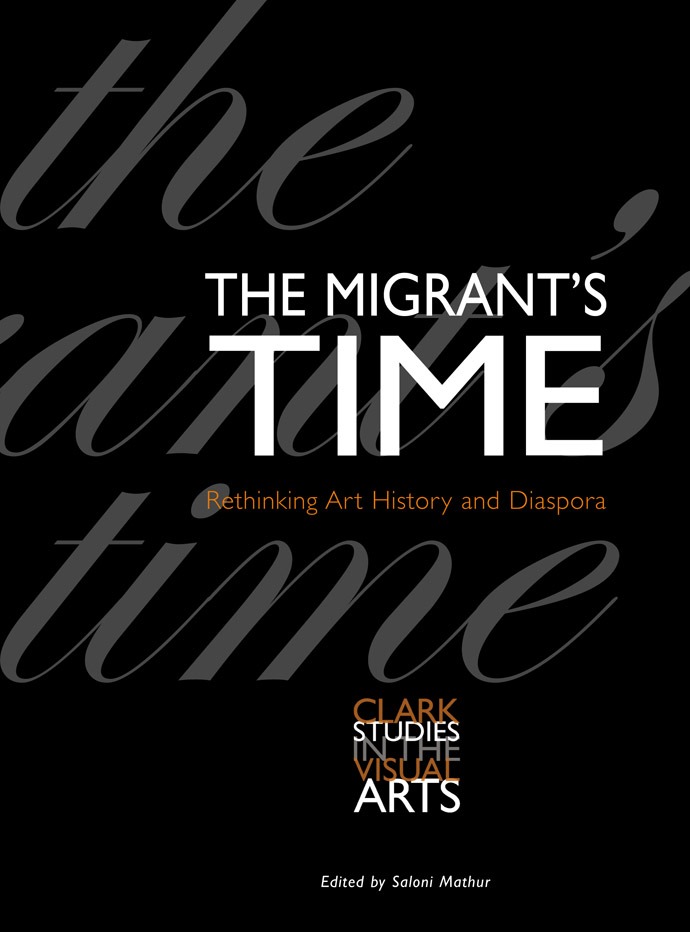
The migrant’s time : rethinking art history and diaspora

The Migrant’s Time: Rethinking Art History and Diaspora explores both the increasing emergence of the theme of migration as a dominant subject matter in art as well as the ways in which the varied mobilities of a globalized world have radically reshaped art’s conditions of production, reception, and display. The title of the volume is taken from an essay by Ranajit Guha, reprinted within, which explores the conditions of alienation and exclusion that are so inextricably linked to the experience of the migrant. In a wide-ranging selection of essays, fourteen distinguished scholars in the fields of visual studies, art history, literary studies, global studies, and art criticism explore the universality of conditions of global migration and interdependence, inviting a rethinking of existing perspectives in postcolonial, transnational, and diaspora studies, and laying the foundation for empirical and theoretical directions beyond the terms of these traditional frameworks.

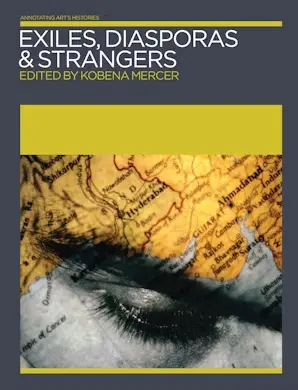
Exiles, diasporas & strangers

Migration, whether freely chosen or forcibly imposed, has been a defining feature of twentieth-century modernity—and much of twentieth-century art. Exiles, Diasporas & Strangers examines life-changing journeys that transplanted artists and intellectuals from one cultural context to another, making clear the critical and creative role that migration, exile, and displacement have played in shaping the story of modern art. Whether manifested in the striking architectural innovations of Nigerian modernism in the 1920s or postmodern works by Jean-Michel Basquiat and black British filmmakers in the 1980s, the multidirectional appropriation and borrowing described in these essays give us new perspectives on twentieth-century art and modernity. Distinguishing between exile and diaspora, emigration and immigration, and “the stranger” and “the other,” the book examines the different conditions that structure the artist’s experience and aesthetic strategies. From indigenous artists and the question of authorship to the influence of émigré art historians on art history, from the aesthetics of the African diaspora to Adrian Piper’s metaphorical exile between philosophy and art, these connections and disconnections in a network of traveling cultures continue art history’s efforts to come to terms with the postcolonial turn.

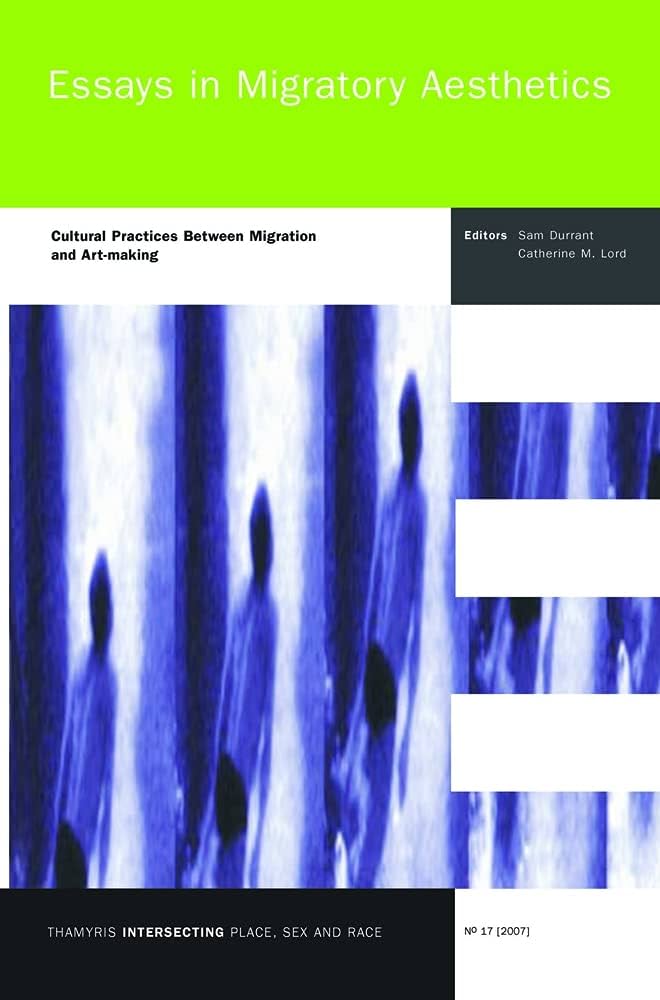
Essays in migratory aesthetics : cultural practices between migration and art-making

This volume addresses the impact of human movement on the aesthetic practices that make up the fabric of culture. The essays explore the ways in which cultural activities—ranging from the habitual gestures of the body to the production of specific artworks—register the impact of migration, from the forced transportation of slaves to the New World and of Jews to the death camps to the economic migration of peoples between the West and its erstwhile colonies; from the internal and external exile of Palestinians to the free movement of cosmopolitan intellectuals. Rather than focusing exclusively on art produced by those identified as migrant subjects, this collection opens up the question of how aesthetics itself migrates, transforming not only its own practices and traditions, but also the very nature of our being in the world, as subjects producing, as well as produced by, the cultures in which we live. The transformative potential of cultures on the move is both affirmed and critiqued throughout the collection, as part of an exploration of the ways in which globalisation implicates us ever more tightly in the unequal relations of production that characterise late modernity. This collection brings academic scholars from a variety of disciplines into conversation with practising visual and verbal artists; indeed, many of the essays break down the distinction between artist and academic, suggesting a dynamic interchange between critical reflection and creativity.

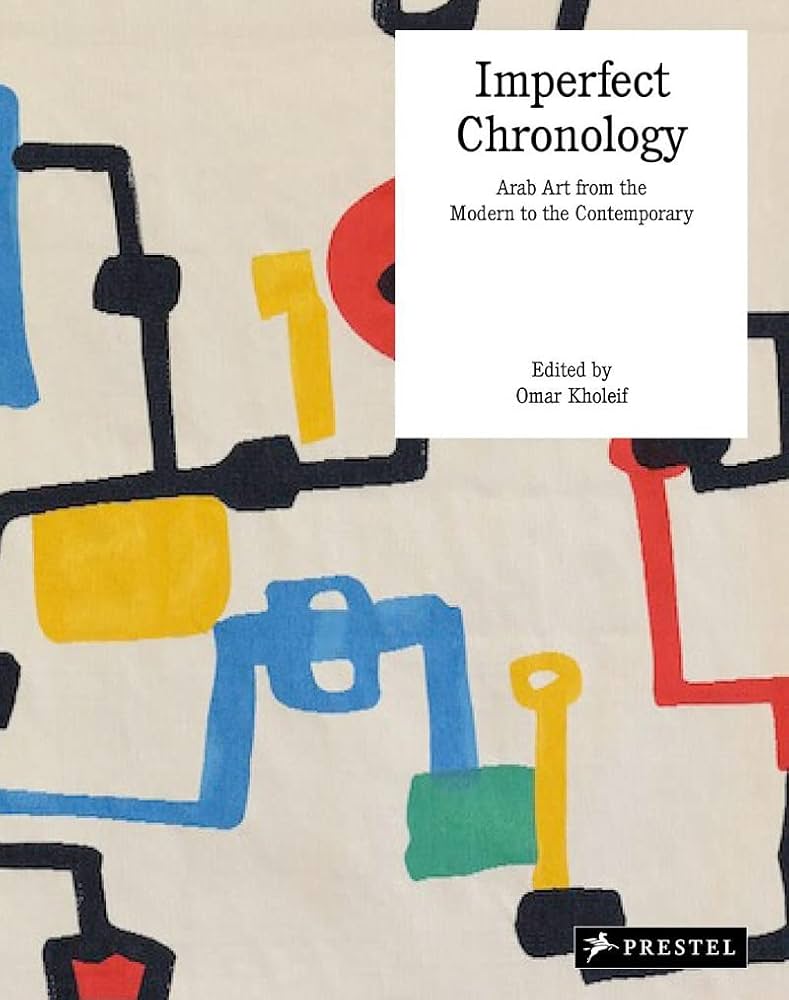
Imperfect chronology : Arab Art from the Modern to the Contemporary : works from the Barjeel Art Collection

Based in Sharjah, United Arab Emirates, the Barjeel Art Foundation was established to contribute to the development of the evolving art scene in the Arab region by building a prominent, publicly accessible art collection in the UAE. Over time it has grown to become one of the most holistic collections of Arab art, fostering critical dialogue around art practices both in the region and internationally. Coinciding with a year long series of exhibitions at the Whitechapel Gallery during 2015 and 2016, this unique overview features many rarely seen works by artists across the region from North Africa to the Gulf states as well as Western Asia. Spanning a period from the turn of the twentieth century to the present day, this publication tells a striking visual story of artists who challenged the notions of tradition, territory, and geography. Featuring more than 60 artists and over 100 works of art, along with essays by leading scholars, curators and artists such as Sultan Sooud Al Qassemi, Kamal Boullata, Iftikhar Dadi, Omar Kholeif, Edward McDonald-Toone, Rasha Salti, Nada Shabout and Gilane Tawadros.

Poétique de la relation

Détails
«Esthétique de la terre ? Dans la poussière famélique des Afriques ? Dans la boue des Asies inondées ? Dans les épidémies, les exploitations occultées, les mouches bombillant sur les peaux en squelette des enfants ? Dans le silence glacé des Andes ? Dans les pluies déracinant les favelas et les bidonvilles ? Dans la pierraille et la broussaille des bantoustans ? Dans les fleurs autour du cou, et les ukulélés ? Dans les baraques de fange couronnant les mines d’or ? Dans les égouttoirs des villes ? Dans le vent aborigène ravagé ? Dans les quartiers réservés ? Dans l’ivresse des consommations aveugles ? Dans l’étau ? La cabane ? La nuit sans lumignon ?
Oui. Mais esthétique du bouleversement et de l’intrusion. Trouver des équivalents de fièvre pour l’idée « environnement » (que pour ma part je nomme entour), pour l’idée « écologie », qui paraissent si oiseuses dans ces paysages de la désolation. Imaginer des forces de boucan et de doux-sirop pour l’idée de l’amour de la terre, qui est si dérisoire ou qui fonde souvent des intolérances si sectaires.»

Les lieux de la culture : une théorie postcoloniale

Salué aussi bien par Edward Said que par Toni Morrison ou J. M. Coetzee, Homi K. Bhabha est l’un des théoriciens les plus importants et les plus influents du postcolonialisme. S’appuyant sur la littérature, la philosophie, la psychanalyse et l’histoire, il invite notamment à repenser les questions très actuelles d’identité et d’appartenance nationales ; à dépasser, grâce au concept très fécond d’hybridité culturelle, la vision d’un monde dominé par l’opposition entre soi et l’autre ; à saisir comment, par le biais de l’imitation et de l’ambivalence, les colonisés introduisent chez leurs colonisateurs un sentiment d’angoisse qui les affaiblit considérablement ; ou encore, plus largement, à comprendre les liens qui existent entre colonialisme et globalisation.

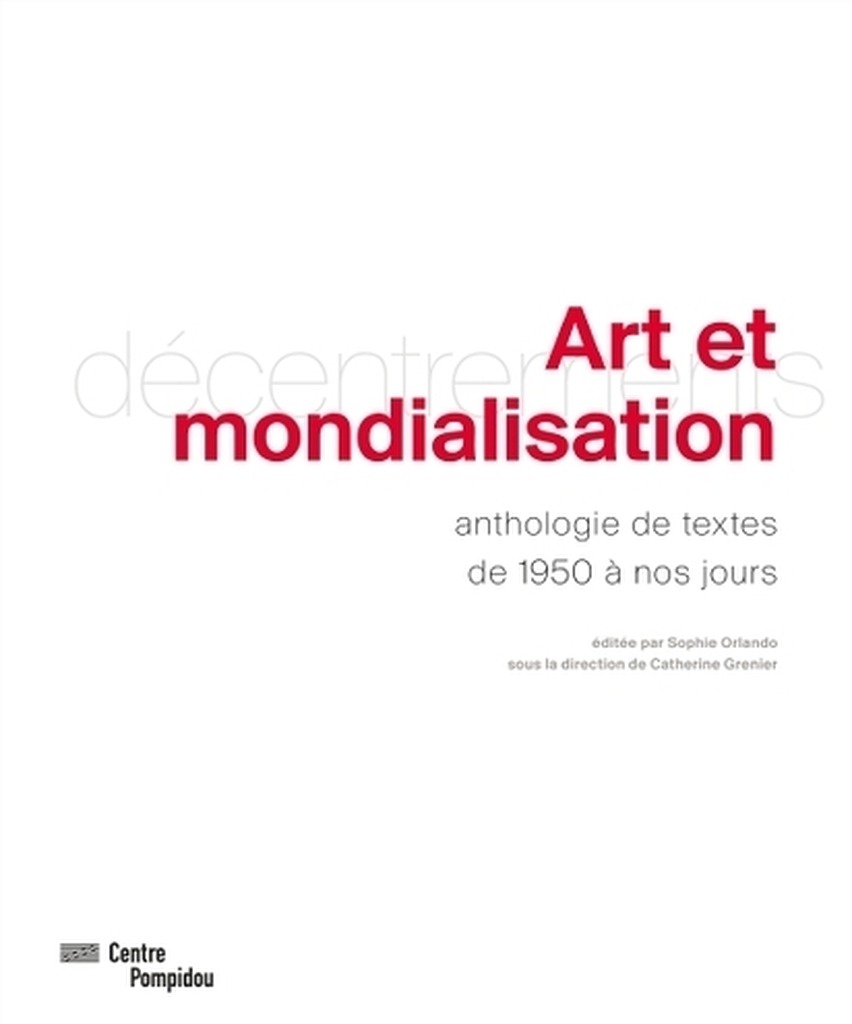
Art et mondialisation : décentrements : anthologie de textes de 1950 à nos jours

« Cette anthologie est un outil précieux pour tous ceux qui s’interrogent sur les relations entre l’art et la mondialisation à l’époque contemporaine. Elle propose une sélection des principaux écrits issus des sciences sociales qui contribuent à une pensée du décentrement et à une révision de l’histoire de l’art mondiale. De 1950 à nos jours, elle réunit les textes jalons des principaux théoriciens et chercheurs en anthropologie, études culturelles, études de genre et études postcoloniales, ainsi que des textes d’artistes. » (4e de couv.)

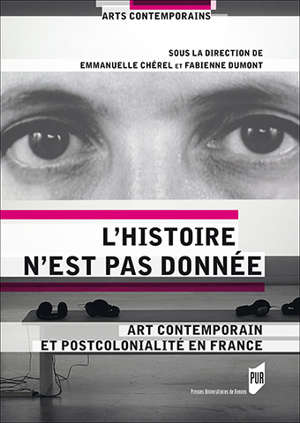
L’histoire n’est pas donnée : art contemporain et postcolonialité en France

L’exposition Magiciens de la terre à Paris en 1989 est considérée comme emblématique de la présence de la postcolonialité dans le champ de l’art contemporain. Pourtant, les débats qu’elle a suscités ont été délaissés en France. En prêtant une attention particulière à la période comprise entre 1989 et 2014, cet ouvrage examine l’oubli très sélectif que la France a de son passé, à partir de l’analyse d’œuvres, de revues et d’expositions.

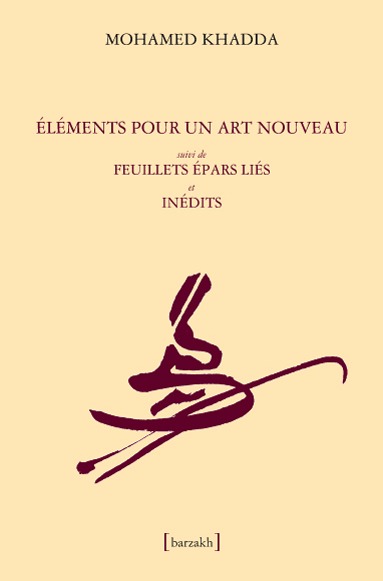
Éléments pour un art nouveau

« Voici, réunis dans cette livraison, le contenu de deux livrets que Mohamed Khadda avait publiés de son vivant, augmenté de textes parus ici ou là. Les deux livrets (Éléments pour un art nouveau, 1972 et Feuillets épars liés, 1983) sont aujourd’hui introuvables en librairie, quoique toujours cités dans la presse. Les autres textes sont disséminés dans des publications diverses et, de ce fait, difficiles d’accès. Il m’a donc paru nécessaire de rassembler et de remettre en circulation ces essais qui, désormais, font partie du corpus de documents portant sur l’activité culturelle initiée au moment de l’accession de l’Algérie à l’Indépendance. »
Naget Khadda Vingt-quatre ans après sa disparition en mai 1991, une publication réunissant les textes les plus importants de Mohamed Khadda. Occasion, pour le lecteur, de (re)découvrir l’érudition et le talent d’essayiste de celui qui fut l’un des fondateurs de la peinture algérienne moderne.

1962 : Comment l’indépendance algérienne a transformé la France

La guerre d’Algérie nous parle de la France d’aujourd’hui, en particulier des questions d’identité et de citoyenneté, mais aussi de l’immigration, de la mémoire et de la réconciliation. L’auteur explique comment la Ve République, à ses débuts, s’est appuyée sur la guerre d’Algérie pour restreindre durablement les libertés individuelles ; et comment l’histoire de l’impérialisme et de l’anti- impérialisme français a été réécrite par l’administration, les politiciens et les journalistes pour présenter la décolonisation comme une « fatalité », un mouvement inévitable, au lieu de dire qu’elle marquait l’échec du projet originel d’intégration nationale dans les colonies. Todd Shepard, né en 1969, est maître de conférences (Associate Professor) à la Johns Hopkins University, aux États-Unis.

NEWSLETTER

Chaque mois, prenez le temps d’embrasser quelques minutes de réconfort avec les productions culturelles du monde arabe et maghrébin, présentées par la newsletter du mat3amclub !